Wednesday, 17 July 2019

Out of the Blue


Last year's drought hit us hard, with little optimism for this season's run of sea trout, due to low survival rates, predation etc in very low flows. However, the sea trout obviously had other ideas, and are running in droves. Since June 16th, we have already caught 103 sea trout, and so far every last one has been released to spawn and run again. A few pictures to whet your appetite...


Coming in off the spring tide.


Anticipation on the stroll along the Lyd in the fading light.


Watching the weir for signs of running fish in the last of the day.

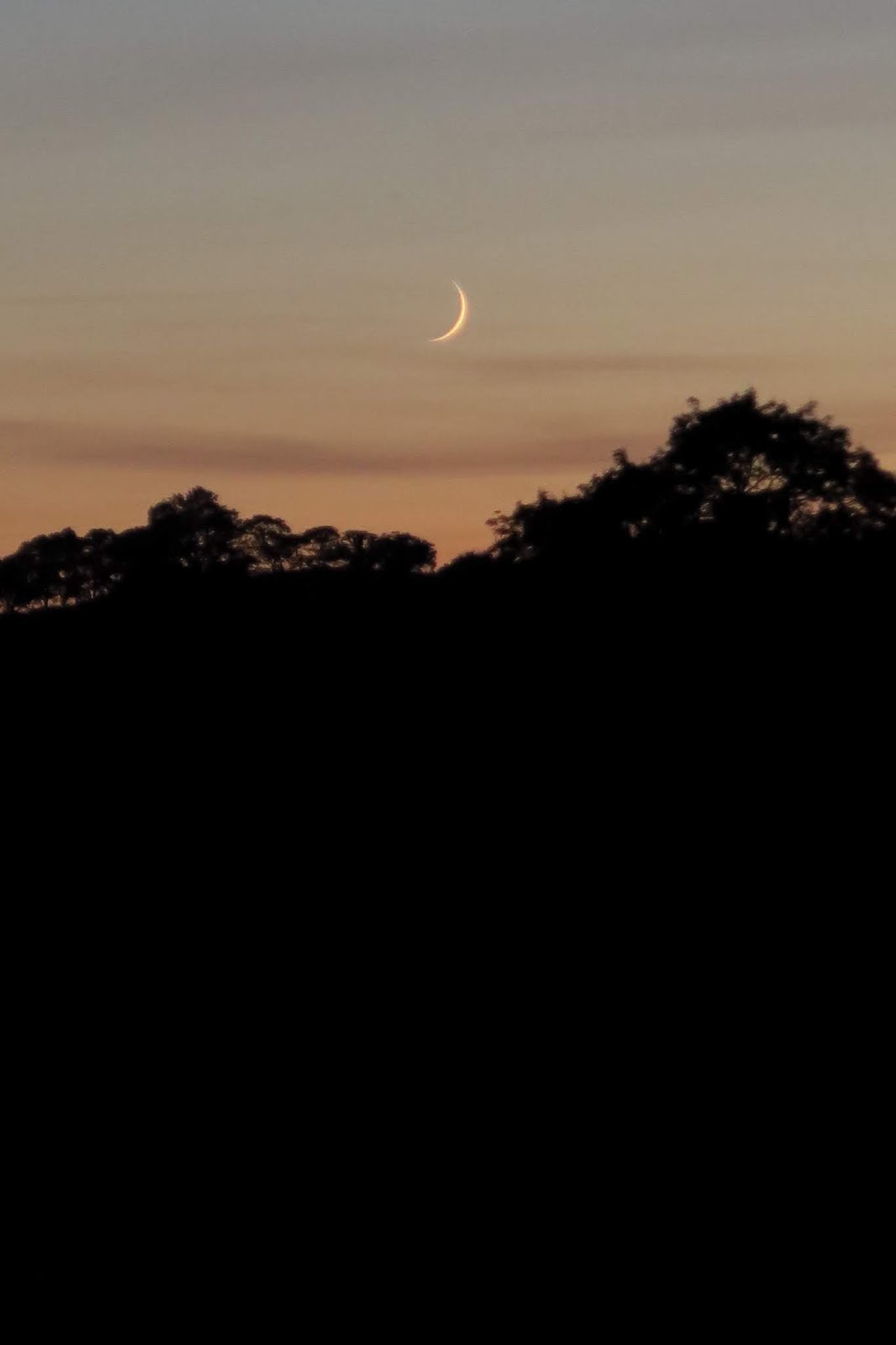
Setting with the sun, the new moon means spring tides and running fish.


A fortnight later, the lunar eclipse, full moon rising but only half of it showing!


Tackling up in the gloaming


The prize, a bar of silver.


Bruno Vincent with his first night-caught sea trout, a very hard-fighting two-pounder.


A bright fresh school peal out of Clare's Pool on the Lyd.

Monday, 1 July 2019

June Update

Trout fishing has been rather good throughout June. There have at times been excellent hatches of fly and our guests have enjoyed some of the best Mayfly action of recent years.

Summer is now in full swing and the seatrout are running hard every night. To date we have had 26 fish from our waters. The first school peal have been caught and we expect the bulk of our run to begin to appear any night. Exciting nights and tired days lie ahead.

There has been some excellent dry fly action for hotel guests over the past month.

A tiny Olive spinner. When your size #20 is just too big!

Squadrons of mayfly spinners on the Tamar

Floating down mid dance


Dusk at Hartley weir

Thomas Crockett patiently waiting for the last light to drain from the corners of the sky 
Jupiter peeping over the Lyd valley on a clear night
Hard run seatrout


Silver under red light

Thursday, 30 May 2019

Mayflies hatching, trout rising. Does it get any better than this?


May has been quite dry, with rivers dropping steadily. Fly hatches have been variable, but the mayfly are now in full swing, and the trout responding nicely, as the videos below will show.


This beauty fell for a dry Deer Hair Emerger


Mayflies were not the only ephemerids around.


A Yellow May Dun, Heptagenia Sulphurea.


The vibrant colours of the new beech leaves give the countryside that clean fresh look which typifies May, and the start of summer


The Jingler is a great all-round fly for imitating most of the olives.


There have been some very nice-sized trout around, with plenty of fish in the nine to eleven inch bracket.


A mayfly pattern in the jaws of a ten-incher.


Any serious entomologists out there who can identify this one?


We know what this is! Ephemera Danica, a female sub-imago,perfectly reflected in the Tamar.


Tuesday, 26 March 2019

Late March, and the trout season is open!

A few dry days, and a decent spell of sunshine, have transformed our little world at Lifton. Storms Freya and Gareth, with floods of 9 and 8 feet respectively, are but a distant memory. March is always too early to really expect to catch very much, but who can resist a few casts in weather like this? An odd fish was rising on Beat 6A, with some Grannom and a few Large Dark Olives hatching. One can be forgiven for thinking that, having been left unmolested by anglers for the winter, the fish would be gullible, but in the clear and lowish water with bright sun and no leaves yet on the trees, they needed a light touch, as befits a truly wild creature. To rise anything at all was a magic experience.


A brook lamprey working the shallows on the Tamar. Then David fishing dry fly on the Thrushel, and Alex in action on the Wolf.

Minus 2 degrees C at Lyd Foot, 6.00 a.m. 


A nice grayling from the Tamar, on the deliciously simple and effective dry Deer Hair Emerger

Beat 6A on the Wolf, David concentrating on his fly.

A sea trout smolt from the Tamar. With any luck he will be back by the end of July as a school peal, having quadrupled his weight. Note the red adipose fin of the 'trutta', and the distinctive black edge to the tail.

Purple Toothwort along the Wolf. Very few of our guests ever see this spectacular flower, which has no stem or leaves, just flowers emerging direct from the root mass. It is parasitic on the roots of alder and willow, and is over and shrouded by faster-growing plants before the trout fishing really gets going.

A lovely view up the Thrushel below the Wolf junction on Beat 6A. A cold north wind belies the bright spring sunshine, but it was extremely pleasant to be back fishing again after the close season, and a weekend in London.

David and Alex on the Arundell Arms stand at the London Fly Fair. A very busy couple of days in the city.

Alex's Hardy Bougle reel, complete with silk line, on the butt of his Hardy CC de France cane rod, nicely framed by the blackthorn blossom.

Monday, 4 March 2019

Invasive Non-Native Species


The North American mink was brought to Britain in the mid-20th century to be farmed for its valuable fur. Equipment failure, accidents, and  smash-and-release raids by animal rights thugs soon found large numbers of these creatures loose in our countryside, and with no natural predators they bred and spread throughout the land. As a water bailiff in the late 1960's, part of my job was to trap and shoot mink, and to advise landowners how to operate the traps which were loaned from the Cornwall River Authority. The Ministry of Agriculture had conveniently passed the responsibility on to the CRA, as they soon found that they had neither the time nor resources. CRA reached the same conclusion, one of the bailiffs with whom I worked trapped 90 in 3 months, and simply gave up. It was not possible to go fishing without seeing a mink, they were absolutely everywhere, using the rivers as conduits, but ranging far and wide. My wife, as a schoolgirl, asked her father what was the pretty little blue thing down by the chickens, and their farm was a good half mile from the Tamar and on top of a hill.
Fast forward to 2019, we now have a thriving otter population (in the 60's they were bordering on extinction in Britain) and for certain this has affected the mink. However there are still a few about, and in areas yet to refill with otters they are still a problem. David Pilkington


This is a 'blue' mink, a colour much prized by the fur farmers, the normal colour being a very dark brown, often with a few white flecks on the upper chest. This chap appeared in front of me while waiting for a cormorant to do much the same on the Tamar last Saturday morning. I had to make a snap decision as to whether it was or not a small otter, but the non-tapering tail and swimming style gave him (it was a dog mink) away. The effect of 36 grams of 4-shot at very close range is apparent.

Tuesday, 26 February 2019

A false Spring?

The last few days have certainly fooled us all into thinking that Spring has well and truly sprung. Yellow Brimstone butterflies on the wing, Grannon on the rivers, and even some fish rising, inspired David and Alex to head out with dry flies Alex had 2 grayling from the romantically named Factory. pool on beat 2 of the Lyd, on dries on Friday afternoon, prompting David to take up the challenge on the next day on the Tamar. Having sat in a stuffy meeting all morning it was a breath of fresh air in every sense. 

Let nobody be deceived by the present lovely weather. Remember that the Great Blizzard of 1891 started on the 9th of March. It filled Tavy Cleave with snow level from hilltop to hilltop, and that summer there was still snow on the Moor on midsummer's day. And of course, only this time last year, we were enjoying the 'Beast from the East'.

Tracks in the muddy sand beside the Tamar show where a moorhen and an otter have passed recently.


David releasing a ten-inch grayling from just above the gauging weir on Beat 9, taken on a small dry Deer Hair Emerger.


The video below shows rising grayling, and some wonderfully inept fishing  skills.


Monday, 7 January 2019

"We hold these truths to be self-evident".


Alexander Jones and David Pilkington looking suitably smug with their woodcock. The self-evident truth is that all 3 woodcock shot that day were killed by chaps wearing ties and breeks, is it just pure coincidence that these sporting little birds allowed themselves to be shot by those who were correctly attired?


The right load, 28 grams of 7 shot.

January has at last dried up a little, making a day rough shooting so much more pleasant. After over a month of heavy floods, grayling fishing has once again become a reality. 27 have so far been caught since Christmas, with pride of place going to Jon Barnard, top rod with a catch of 6 in a morning, topped by an absolute cracker of 16 inches. The fish came from the rough water at the neck of Donkey pool on beat 3 of the Lyd, and proved quite a handful in the strong flow.

Wednesday, 19 December 2018

Midwinter Blues


Tinhay Lake this morning. Where David is standing was dry land only 6 weeks ago.


Groundwater levels are now rising fast - longer waders needed soon!

After such a dry summer, the absolute polarisation of weather and water through the seasons really hits home. We could not buy a decent drop of rain from May to the end of September, yet the last few weeks have seen endless downpours. It is said that Mother Nature always repays her debts, and how true that is. Roadford reservoir, which was drawn down to less that half its capacity this year, is refilling rapidly, with a 5% rise in just a week.


Pale winter sunshine and leafless trees on the river Lyd.


Silver Doctor Pool on the Lyd. The river has dropped a good couple of feet from the overnight peak, and is still carrying a lot of colour. Grayling fishing is definitely on hold for the moment.
For the fish in our rivers, the high autumn flows have made access to the very highest tributaries nice and easy, so there should be a very wide geographical distribution of spawning fish. Sea trout in particular will push well up tiny streams to spawn, and have been seen in pools where a decent fish could barely turn around. David and Alex saw sea trout redds on the Ottery, Wolf, Thrushel, Lyd and Lew. The big flows have not done any favours to our spawning salmon, which are usually some days later than the sea trout,but there were some late fish still coming out of the estuary very recently. They have evolved in these rivers, and no doubt next summer there will be tiny salmon fry around again.
May we wish everybody a very Merry Christmas, and Tight Lines for 2019.

Saturday, 13 October 2018

Now the drought REALLY breaks!

My last post proved to be a little premature - as soon as Storm Bronagh had passed, summer returned, with warm days and nights, and rivers dropping right back to dead low once more. Salmon fishing remained hopeless, and even the trout were tough to catch. I had an afternoon for grayling on the Tamar a few days ago, where each footstep in the water was like an earthquake, each step a tsunami, and the most delicate cast landed like a shipwreck. Despite spooking a lot of fish, I managed 6 beautiful grayling and 8 lovely, out-of-season brownies, all on small dry cdc patterns.
Storm Callum is still raging as I write, with 2.8 inches of rain here at Lifton in the past 30 hours. The rivers are still rising, raging down the valleys in full, glorious spate, carrying leaves, branches and entire trees on their journey to the sea. Salmon and sea trout, bottled up for months in the lower river, will now make strenuous efforts to reach their chosen spawning grounds. It will be quite a sight on the weirs as these fish valiantly fling themselves at the maelstrom. I never fail to marvel at their determination, and we all wish them well on their travels.
David Pilkington

Saturday, 22 September 2018

The drought breaks!

Storm Bronagh swept across Devon overnight on Thursday 20th September. We recorded almost an inch of rain here at Lifton, and the moors and high ground would certainly have had significantly heavier stuff. All the rivers were in a filthy spate first thing on Friday, most of them up around a foot, and carrying all the accumulated silt and algae of the whole summer. The rain had already cleared to a few sharp but very short-lived showers, and in no time at all the levels started to fall.
David walked up to Hartley weir on Beat 3, where the Lyd was roaring over the weir, half of which had been dry land for many weeks. The salmon have taken no time at all to start moving, and a number of salmon and sea trout were leaping at the weir. All the salmon seen were well coloured, as were the sea trout, and are now moving up into the higher reaches in preparation for spawning.
Sergegs Llobanov from Latvia was here for a 50th birthday weekend,  courtesy of his daughter who is at university in Britain. He fished Tinhay lake in the morning and had 4 rainbows, but was keen to fish for real trout on a river. After lunch, having had a quick scout around to check on levels and clarity, David took him to Beat 17 on the upper Lyd which, although still fairly rattling along, had cleared to a fishable state.
A few trout were actually rising, and Sergegs was delighted to catch several trout, including his first ever on a dry fly, an Elk Hair caddis of his own tying. David could not resist a few casts on the Lyd up on Beat 20, where he landed 9 brownies, best two at 8 inches, all on a dry CDC sedge. All the fish were in lovely condition, and the bigger mature trout were obviously well on towards spawning. Careful handling and barbless hooks had them all safely back in the river in seconds.
Rain is falling again, and is forecast to do so all day and on into Sunday morning, so we are expecting rivers to rise again today and indeed tomorrow. At least the summer of 2018, very nice though it may have been for some, has well and truly ended, the parched ground has had a good soaking, and fish are ascending the system once again. We will not be sad to see the end of the drought, and wish our fish a very successful time on the redds.

Monday, 17 September 2018

Leave no stone unturned!

Click on the video below for a view of an otter on the Tamar, taken Sunday 16th September. David had just fished the shallows ( well, the whole river is 'shallows' at present) and taken a salmon parr and two brownies, when the otter appeared almost at his feet. It is difficult to see just what the animal is eating, but by the very quick chomping of the jaws and the immediate resumption of hunting it must be small stuff, possibly loach or bullheads. David filmed the creature for quite a while before, as is obvious, he was at last spotted. The otter makes a poor effort at retreating, takes another look, and carries on fishing completely unperturbed. All this took place at around 4.00 p.m., not bad for a supposedly shy and nocturnal beast.


Monday, 10 September 2018

Still 'enjoying' the 'wonderful' summer of 2018

You may have noticed that it has been rather warm this summer, and slightly short of rain. Here in the now green and pleasant land of Devon, one could almost believe that all was well. Sadly, the dribs and drabs of drizzle which fell here and there in August, although just sufficient to green up the fields and bring the silage munchers out in force, has been woefully inadequate to top up the parched ground. While digging a hole for a fence post recently, David went down to his elbow in the soil and it was still coming up like dust, completely dry. So, unsurprisingly, our rivers are a tad low.


This is the river Thrushel at the gauging station at the top of beat 5B.


This is the river Lyd on Beat 2 by the Ambrosia factory. Although very low and tranquil, the Lyd is fed from the high tops of Dartmoor and has still managed to retain some hint of a resemblance to a river. Sea trout have made their way through to above the weir on Beat 3, but even for night fishers they have been elusive in the sedate and clear water.


Wow! A river bubbling with a strong flow of water. This is the gauging station on the river Thrushel on Beat 4, only a couple of miles downstream from the first photo. Roadford reservoir is currently releasing 80 megalitres of water a day, which comes down the river Wolf, into the Thrushel, then the Lyd, and on down the Tamar to Gunnislake, where it is all pumped out to go and keep the good people of Plymouth suitably hydrated. This picture comprises about 95% reservoir water, and of course this does not reach the sea. However it is very useful to give our guests some flowing water in which to drift a fly.


The river Tamar at Polson gauging station on Beat 9A. Odd bits of drizzle and the occasional shower have given a lift of a few inches once or twice during August, the line of bleached algae on the concrete showing how the river came up all of about 3 inches a couple of times. Amazingly there is a very small number of salmon upstream of this point, but they are unlikely to take at any time soon. A serious monsoon is now very much needed.
The trout have at last come into their true form for September, feeding enthusiastically, but requiring good casting and presentation.